Vending Machines as Extra Revenue — and Why Robotic Units Are Changing the Game
Vending has quietly become one of the most accessible side businesses in the country. A single well-placed machine requires no storefront, no payroll, and almost no daily attention — yet it can generate steady, largely passive revenue month after month. That combination is why operators, small-business owners, and even property managers keep adding machines to their portfolios.
The money math is straightforward. A healthy snack or drink machine in a decent location typically nets somewhere between $200 and $600 in profit per month after product cost, depending on foot traffic and pricing. Put three or four machines across the right locations — a gym, an apartment lobby, a busy break room, a car dealership — and you are looking at a meaningful second income stream that runs while you sleep.
Location is the single biggest lever. The same machine that earns $150 a month in a quiet office can clear four times that in a high-traffic transit hub or a 24-hour facility. This is exactly why smart operators are constantly relocating and redeploying machines: chasing the locations where the numbers actually work, and pulling units out of the ones that do not.
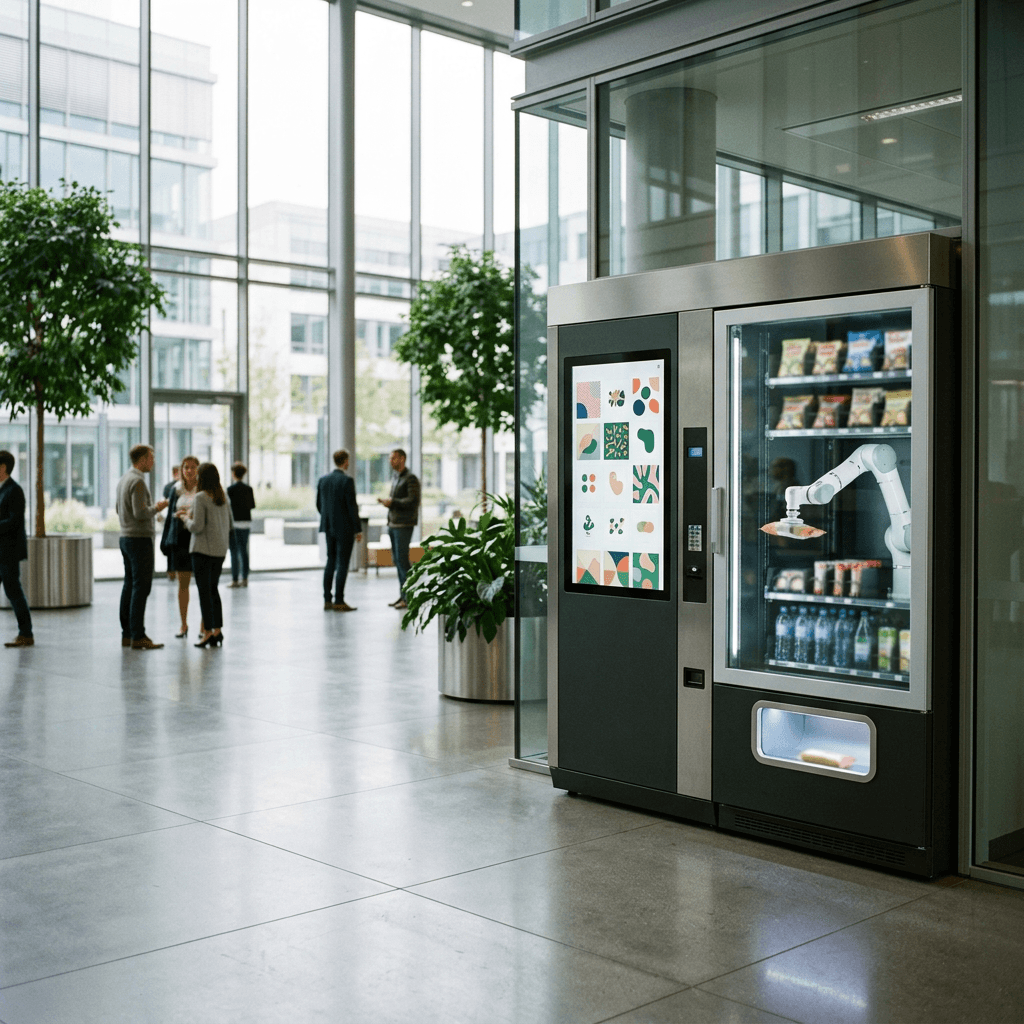
That is where the new generation of vending hardware gets interesting. Robotic and smart-vending machines have moved far beyond the coil-and-glass box. Modern units use robotic retrieval arms, refrigerated multi-temperature zones, touchscreen ordering, cashless and app-based payment, and real-time telemetry that tells the operator exactly what sold and when. Some dispense fresh food, electronics, or even hot meals — categories that were impossible for traditional machines.
Because these robotic units are connected, they change the economics. Operators get remote inventory tracking, dynamic pricing, and automatic low-stock alerts, which means fewer wasted restock trips and less lost revenue from empty slots. A single smart machine can carry a wider, higher-margin product mix and often earns significantly more per location than the mechanical units it replaces.
The catch is that these machines are heavier, more sensitive, and far more expensive than a classic vendor. Robotic arms, compressors, touchscreens, and onboard computers do not tolerate being tipped, dropped, or jostled. Moving one incorrectly can mean a repair bill that erases months of profit — or a warranty claim that gets denied because the unit was mishandled.
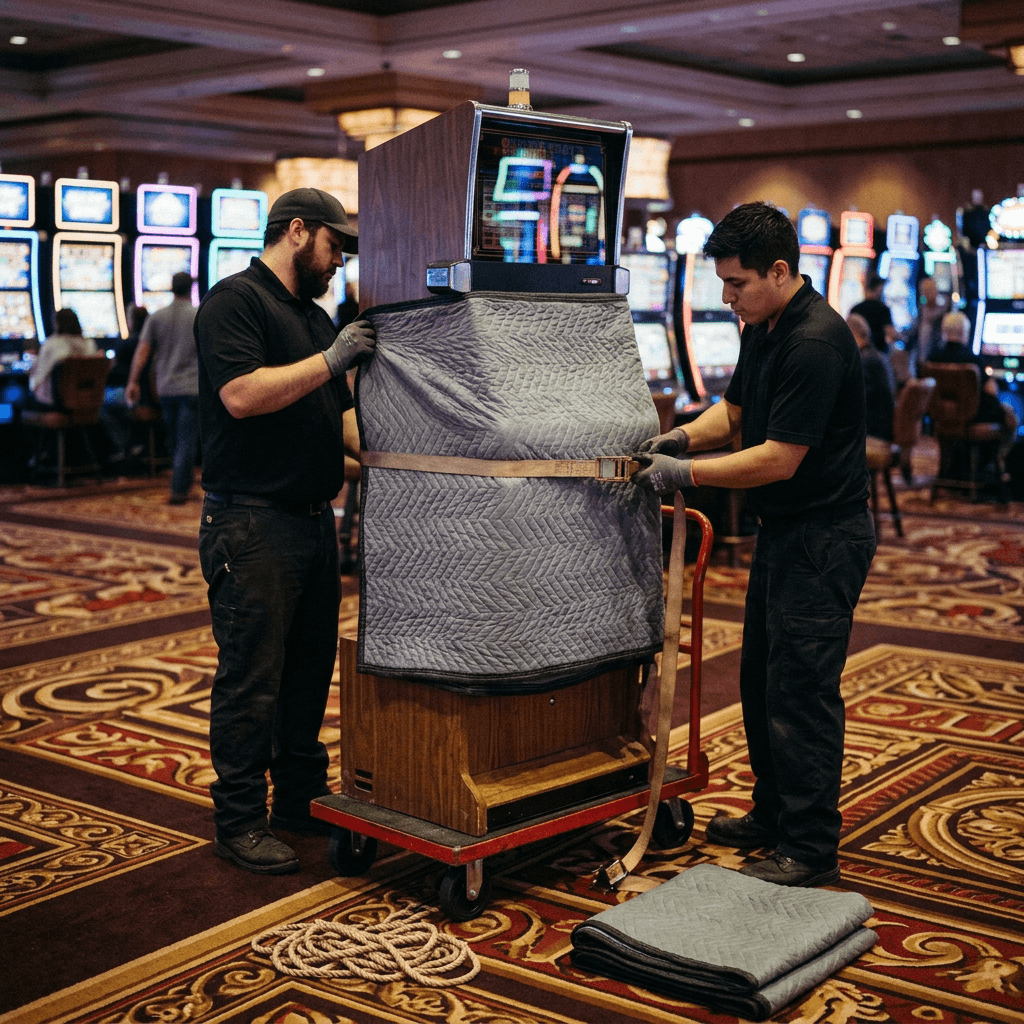
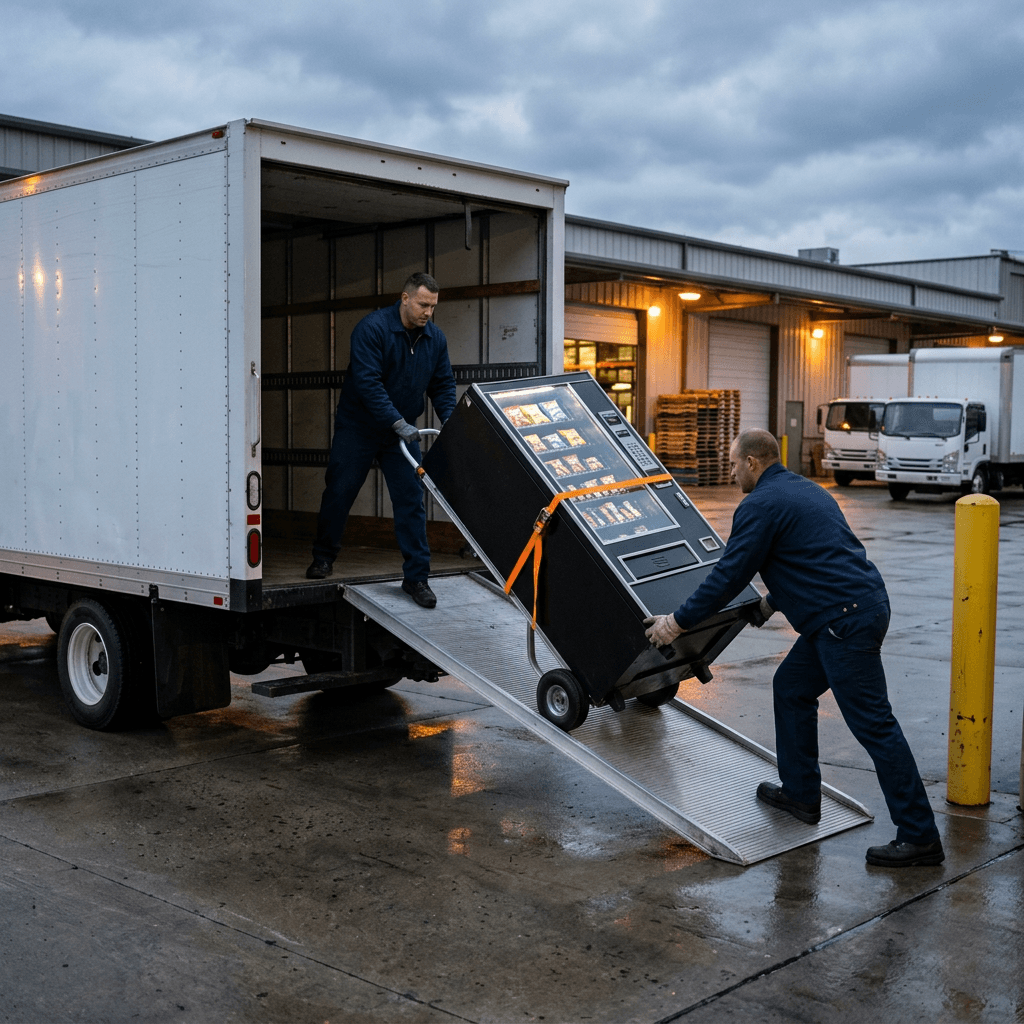
That is our job. We relocate both traditional and next-generation robotic vending machines upright, cushioned, and secured, protecting the compressors, screens, and robotic mechanisms in transit. Whether you are placing your very first machine, redeploying units to chase better-earning locations, or rolling out a fleet of smart vendors across multiple sites, we get them there level, intact, and ready to earn.
Vending only makes money when the machine is in service and in the right spot. As the hardware gets smarter and the revenue per location climbs, moving these units safely and quickly is more important than ever — and that is exactly what we do, nationwide and across borders.
Need this moved?
We relocate slot machines, vending machines, jukeboxes, and more — nationwide and internationally. Get a fast, no-obligation quote.
Key takeaways
- Newer machines carry more electronics and screens, so careful wrapping and upright transport matter even more.
- Empty all product, coins and cash, and unplug the machine at least 24 hours before pickup so refrigeration and electronics are fully powered down.
- Secure doors, glass and loose parts, and keep the machine upright the whole way. Most machines are not built to carry their weight lying down.
- Measure the machine and every doorway, stairway, hallway and elevator at both ends before booking.
- Ask for blanket or pallet wrap, liftgate service and inside delivery in the quote, so the price matches the job.
Related moving services
USA Vending Machine Movers handles the moves described in this article, locally, across the United States and internationally. See Vending Machine Moving & Transport for how we prepare, wrap, load and deliver each machine, or browse our service areas to find your city. For a quote, call 866-216-7742 or use the quote form with your pickup and delivery ZIP codes.
Planning your own vending machine move
If this article matches a move you are planning, these are the steps that turn it into a booked, on-time delivery. They apply whether the vending machine is going across town, to another state or overseas.
- Gather the basics: the vending machine make and model if you have it, its approximate size, and the pickup and delivery addresses or ZIP codes.
- Note the access at both ends, including steps, stairs, elevators, narrow doors, tight turns, parking and whether there is a loading dock. Photos are the fastest way to share this.
- Request a quote by phone at 866-216-7742 or through the quote form. The quote should list blanket or pallet wrap, liftgate service, inside delivery and any storage.
- Pick a pickup window and a delivery date that work for both sites. If the destination is not ready, ask about storage between the two.
- Prepare the machine the day before. Remove all product and coins, tape the coin door, and secure or remove spirals and shelves that could shift.
- On moving day the crew wraps a snack, drink or combo vending machine, moves it upright with the right dolly, loads it with a liftgate where there is no dock, and straps it in place for the trip.
- At delivery the machine is brought inside, set where it will run, levelled and unwrapped. Let refrigerated machines stand before plugging them back in.
What changes the price
- Distance and route. A local move, a regional move and a cross-country move are priced differently, and flexible dates on a shared lane usually cost less than a dedicated truck.
- Size and weight. The heavier and larger the vending machine, the more crew and equipment it needs.
- Access. Stairs, elevators, long carries and the lack of a dock all add time at pickup or delivery.
- Extra services. Liftgate, inside delivery, crating, storage and after-hours work each add to the quote.
- Timing. A fixed or short-notice date costs more than a flexible pickup window.
Domestic and international options
Within the United States, a vending machine can travel on a dedicated truck for a fixed date, or on a consolidated lane with other freight when timing is flexible. For international moves we crate the machine for ocean or air freight, prepare the commercial paperwork customs requires, and arrange delivery from the port or airport to the final site. You supply the documents only the owner can provide, such as proof of ownership and any permits the destination requires.
How the machine is protected in transit
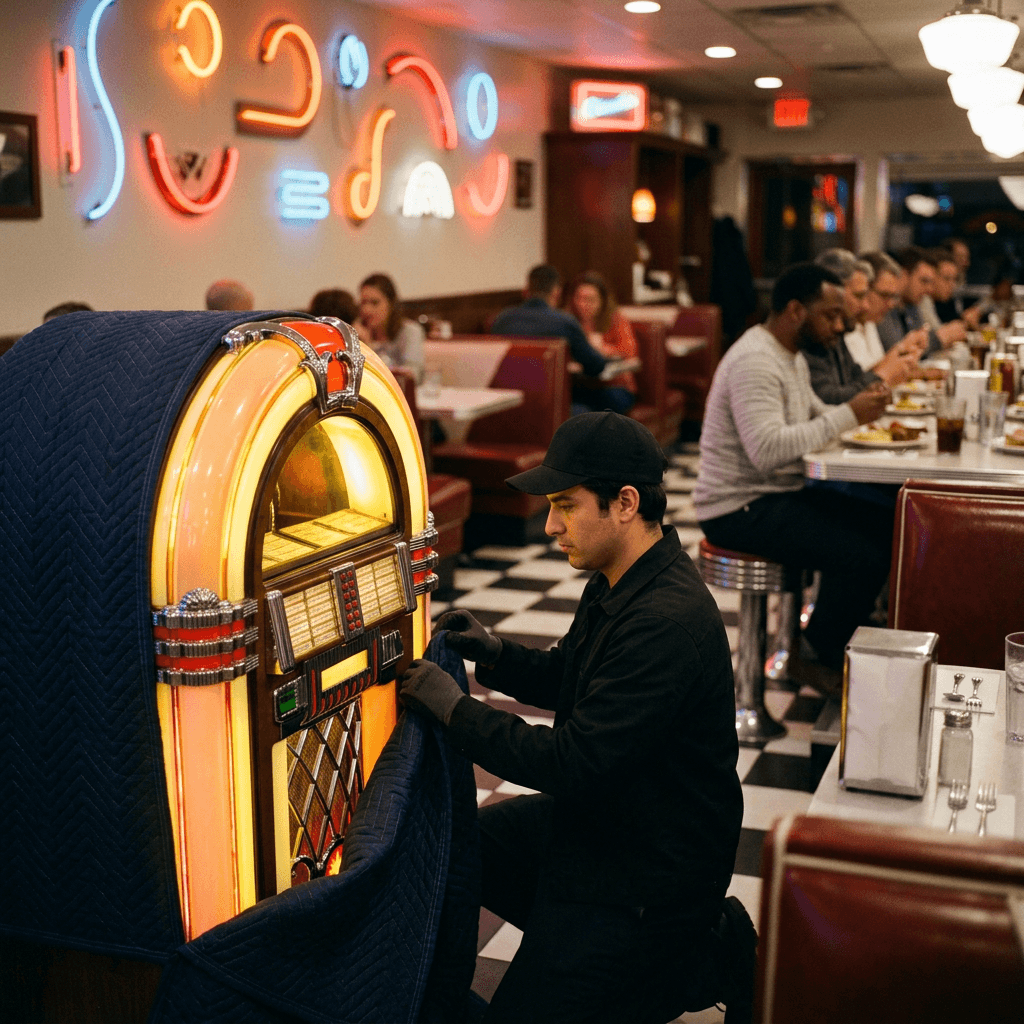
A vending machine is heavy, top-heavy and easy to scratch, so protection starts before it leaves the building. For local and regional moves it is wrapped in moving blankets and padded at the corners and glass. For freight and long-distance moves it is shrink-wrapped to a pallet, and fragile or international shipments are crated. In the truck it stays upright and is strapped on its own so it cannot tip or rub against other freight. In very hot or cold weather, ask about scheduling and how long the machine will sit in the truck.
After delivery
- Let a refrigerated machine stand upright for several hours before plugging it in, following the manufacturer's guidance, so the refrigerant can settle.
- Once powered, confirm the compressor runs and the cabinet reaches temperature before restocking.
- Reinstall spirals and shelves, then test every selection, the coin mechanism, bill validator and card reader before the machine goes back into service.
If anything looks wrong when the machine is unwrapped, take photos and note it on the delivery paperwork before the crew leaves.
Getting the vending machine ready for pickup
- Empty it. Remove all product, coins, bills and loose parts, and keep the keys with you or tape them to the machine in an envelope.
- Unplug it early. Disconnect power at least 24 hours ahead so refrigerated units can defrost and drain, and wipe up any water.
- Secure what moves. Lock or tape doors, and protect glass fronts and displays so nothing can swing open or crack on the way out.
- Measure the path. Check the width of every doorway, hallway and turn, and note stairs, elevators and the distance to the truck at both sites.
- Clear the way. Move furniture and other equipment out of the route and confirm parking or dock access for the truck.
What is included
A standard quote covers the crew and the truck, blanket wrap or pallet and shrink-wrap depending on the distance, loading and strapping, liftgate unloading when there is no dock, and inside delivery to the spot you choose. Crating, storage and after-hours delivery are added only when the move needs them. To plan a vending machine move, call 866-216-7742 or use the quote form.
Common mistakes when moving a vending machine
- Laying it down. Most machines are built to stand upright. Tipping a vending machine on its back or side can crack glass, shift internal parts and, in refrigerated units, push compressor oil into the cooling lines.
- Skipping the measurements. A machine that fits through the front door may not fit around a tight hallway turn or into a small elevator cab. Measuring both buildings ahead of time avoids a wasted trip.
- Leaving product, coins or keys inside. Loose items add weight, shift in transit and can damage the mechanism. Keys left inside a locked machine can delay delivery.
- Plugging in too soon. Refrigerated machines should settle upright after the trip before they are powered on.
- Booking without describing the access. Stairs, a missing loading dock or a long carry from the truck change the crew and equipment needed. Mention them when you ask for a quote.
Dedicated truck or shared lane?
For a long-distance vending machine move there are two common ways to ship. A dedicated truck carries only your equipment, picks up and delivers on the dates you choose and suits fixed deadlines. A shared or consolidated lane carries your machine alongside other freight going the same direction, which usually costs less but needs a more flexible pickup and delivery window. Tell us your deadline when you request a quote and we will suggest the option that fits.
Scheduling and storage
Give as much notice as you can, especially for long-distance moves, fixed delivery dates or several machines at once. If the new site is not ready when the old one has to be cleared, the vending machine can be picked up, stored upright and wrapped, and delivered once the destination is ready. Ask for storage when you request a quote so it is included in the price and nothing has to be rearranged at the last minute.
Before moving day, confirm who will be on site at each address, the arrival window, and any building rules such as delivery hours, elevator booking or a certificate of insurance. A short call the day before usually prevents most delays.
Questions to ask before you book
- Have you moved this kind of vending machine before, and how will it be wrapped and secured?
- Is the machine kept upright the whole way?
- Does the price include liftgate, inside delivery and placement, or are those extra?
- What happens if the destination is not ready on the delivery date?
- What insurance or valuation coverage applies while the machine is in transit?
Measuring the route for a vending machine
Most moving-day problems start with a measurement nobody took. Before the crew arrives, measure the vending machine's height, width and depth, then follow the path it will take at both ends and measure each point where it could get stuck.
- Every doorway on the route, measured with the door fully open. Hinges and door stops often take away an inch or more.
- Hallway widths and any tight turns, since a tall machine needs room to pivot as well as to pass.
- Stairs: the number of steps, their width, any landings and whether there is a handrail that can be removed.
- Elevators: the door opening, the inside depth and the posted weight limit.
- Low ceilings, light fixtures, sprinkler heads and door closers that a tall machine on a dolly could hit.
Send these numbers with your quote request, along with a few photos of the route. If something is too tight, it is far easier to plan around it, for example by removing a door or booking a freight elevator, than to discover it on the day.