How to Transport a Vending Machine (Step-by-Step)
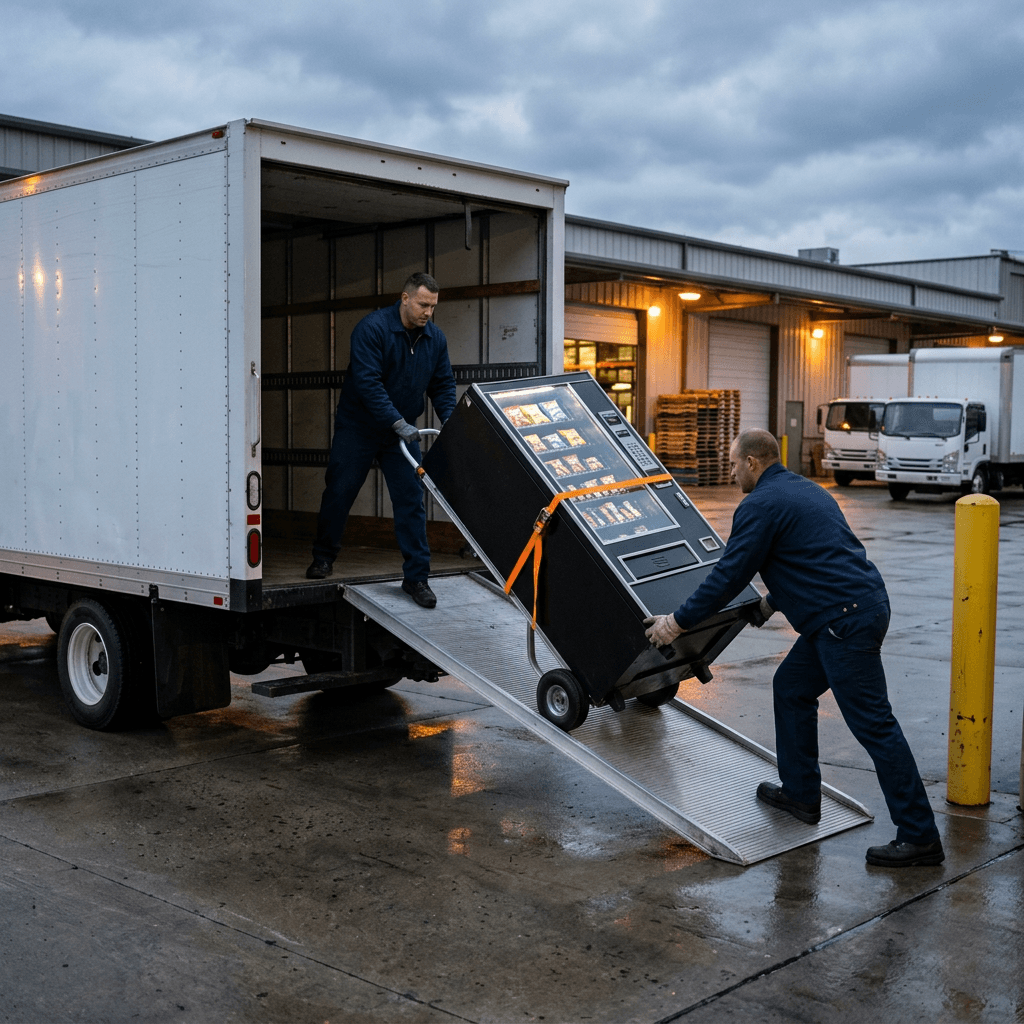
To transport a vending machine, empty it, unplug it a day ahead so refrigerated units can defrost, measure every doorway on the route, move it upright on a rated appliance dolly, and strap it to the wall of a liftgate box truck at two heights. A full-size snack or drink machine weighs 600 to 900 pounds and carries most of that weight up high, so method matters far more than muscle. Follow the seven steps below for a local move, a long-distance move or a full route relocation.
Why Is a Vending Machine Hard to Move?
- It is top-heavy. The upper cabinet and the refrigeration deck hold much of the weight, so a machine tipped past its balance point on a dolly is very hard to save.
- Refrigerated units must stay upright. Laying a cold-drink machine on its back lets compressor oil run into the refrigerant lines, and powering it on too soon can ruin the compressor.
- The front is fragile. Glass-front merchandisers and touchscreen units crack under point pressure from a strap, a dolly edge or a forklift tine.
- The hard part is the last 50 feet. Break rooms, basements, stairwells, schools, hospitals and office towers with freight elevator windows cause more trouble than the highway.
- Downtime costs money. Every day a machine is off the floor is a day of lost sales for an operator.
Step 1: How Do You Prepare a Vending Machine for Moving?
Remove all product, coins and cash, and take out the coin tubes and bill stacker. Unplug refrigerated machines 12 to 24 hours before pickup so they can defrost, then empty and dry the condensate pan. Tape or remove loose shelves, spirals and trays, and bag and tag cords, keys and small parts. Disconnect card readers, telemetry and any water lines. Lock the door and tape it shut, then photograph the front, sides and serial plate as your condition record.
Step 2: What Should You Measure Before Moving a Vending Machine?
Measure the machine's height, width and depth, then measure every doorway, hallway, elevator and turn at both ends. Most machines need at least a 36-inch doorway. Note steps, curbs, thresholds, ramps and soft ground like gravel or grass. Ask the building about freight elevator reservations, loading dock hours and whether movers need a certificate of insurance (COI). Most damage happens at these pinch points, so knowing them ahead of time is the single best way to avoid it.
Step 3: What Equipment Do You Need to Move a Vending Machine?
- A vending or appliance dolly rated well above the machine's weight, with a ratchet strap.
- Moving blankets, corner protectors and stretch wrap for the glass front and sides.
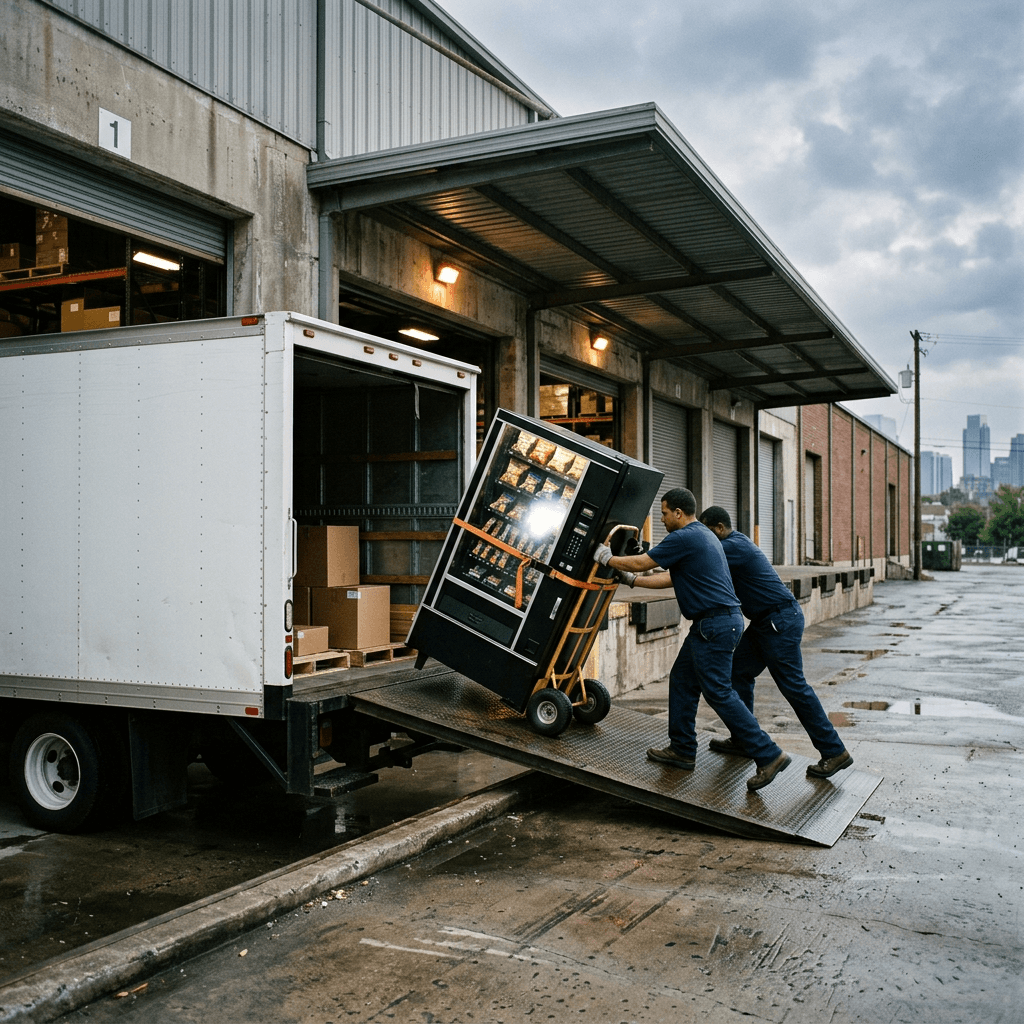
- A liftgate or ramps rated for the load. Never "walk" a 700-pound machine off a truck bed.
- Stair-climbing equipment if there is no elevator.
- At least two trained people, and three for stairs.
Step 4: Can You Lay a Vending Machine Down?
Avoid it, especially with refrigerated machines. Laying a vendor on its back or side can push compressor oil into the cooling lines. If a machine had to be tilted or laid down to clear a doorway, let it stand upright for at least as long as it was on its side before plugging it in. A full day is safest. Machines that stayed upright the whole way can usually be powered on once they are level and in place, following the manufacturer's guidance.
Step 5: What Truck Do You Need to Transport a Vending Machine?
A pickup truck is the wrong tool. The machine is too tall and top-heavy to ride safely in a pickup bed, and there is nothing to strap it to at the right height. Use a box truck or trailer with a liftgate and E-track or logistics posts so the machine can be strapped upright against the wall. For long distances, air-ride suspension helps protect electronics and glass from road shock.
Step 6: How Do You Secure a Vending Machine in a Truck?
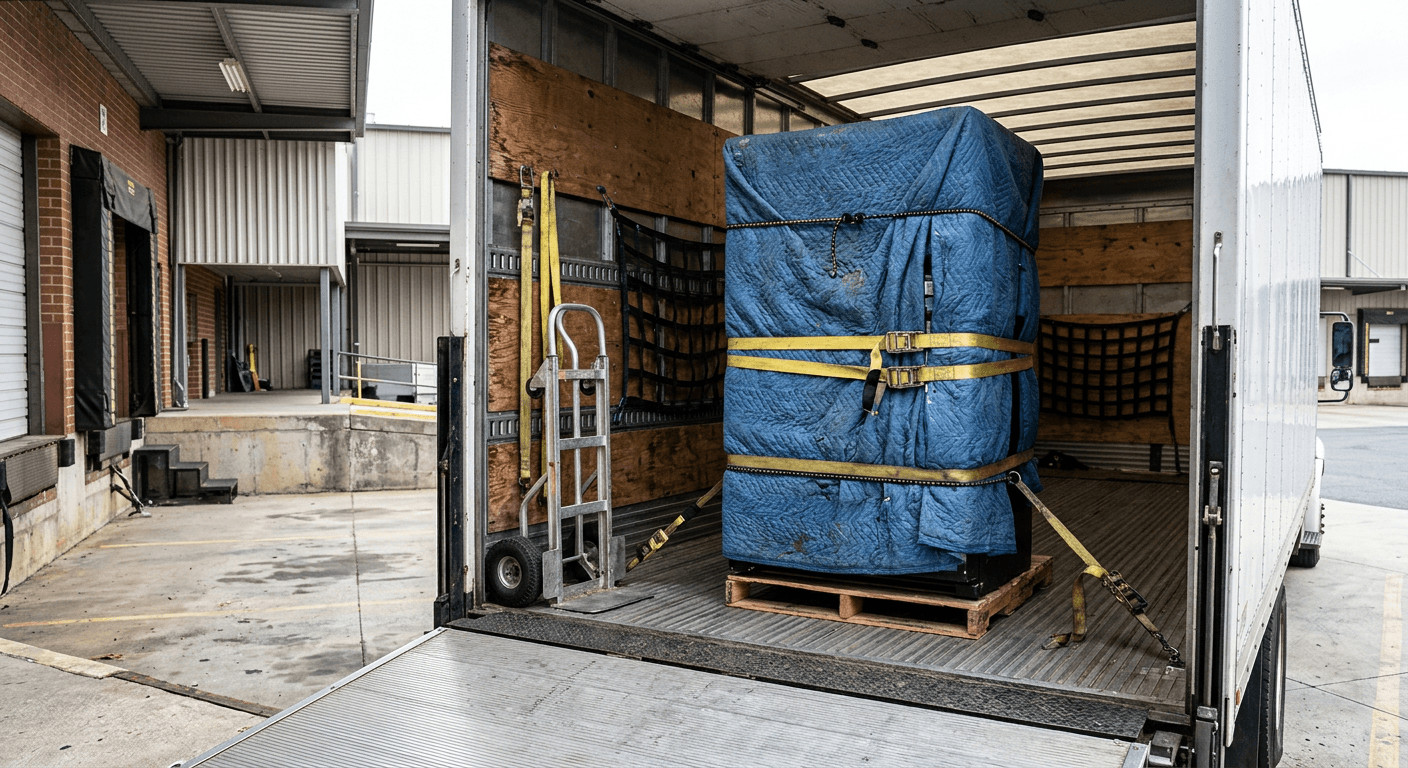
Strap the machine to the truck wall at two heights, with blankets between the straps and the cabinet. Never run a strap across bare glass. Block the base so it cannot slide, and face the glass front toward the wall or pad it well. Re-check the straps after the first few miles and at every stop.
Step 7: How Do You Unload, Place and Restart the Machine?
Lower the machine on the liftgate, roll it in on the dolly and set it in its final spot. Level it so the door closes and products drop correctly. Wait before powering a refrigerated unit if it was tilted (see Step 4), then test the bill validator, coin mechanism, card reader, cooling and every selection before you restock.
For the most common ways these steps go wrong, read 10 vending machine moving mistakes to avoid.
Should You Move a Vending Machine Yourself or Hire Movers?
A do-it-yourself move can work for a short, ground-level move with the right truck, dolly and helpers. Hire professional vending machine movers when:
- There are stairs, tight turns or no loading dock.
- The machine is going to another city or state.
- You are moving several machines or a whole route.
- The machine is high value: glass-front, refrigerated, a micro-market cooler, an ATM or a crypto kiosk.
- You need storage between locations.
How Much Does It Cost to Move a Vending Machine?
Vending machine moving cost depends on distance, the number of machines, access at each end (stairs, docks, elevators), the machine's size and weight, and whether you need liftgate, inside delivery or storage. Local moves and long-distance vending machine shipping are priced differently, and a machine that can ride on a truck already running your lane usually costs less than a dedicated truck.
See what moves the price on our vending machine shipping cost page, or send your pickup and delivery ZIP codes, the machine type and a photo for an exact quote.
How Our Vending Machine Movers Handle the Job
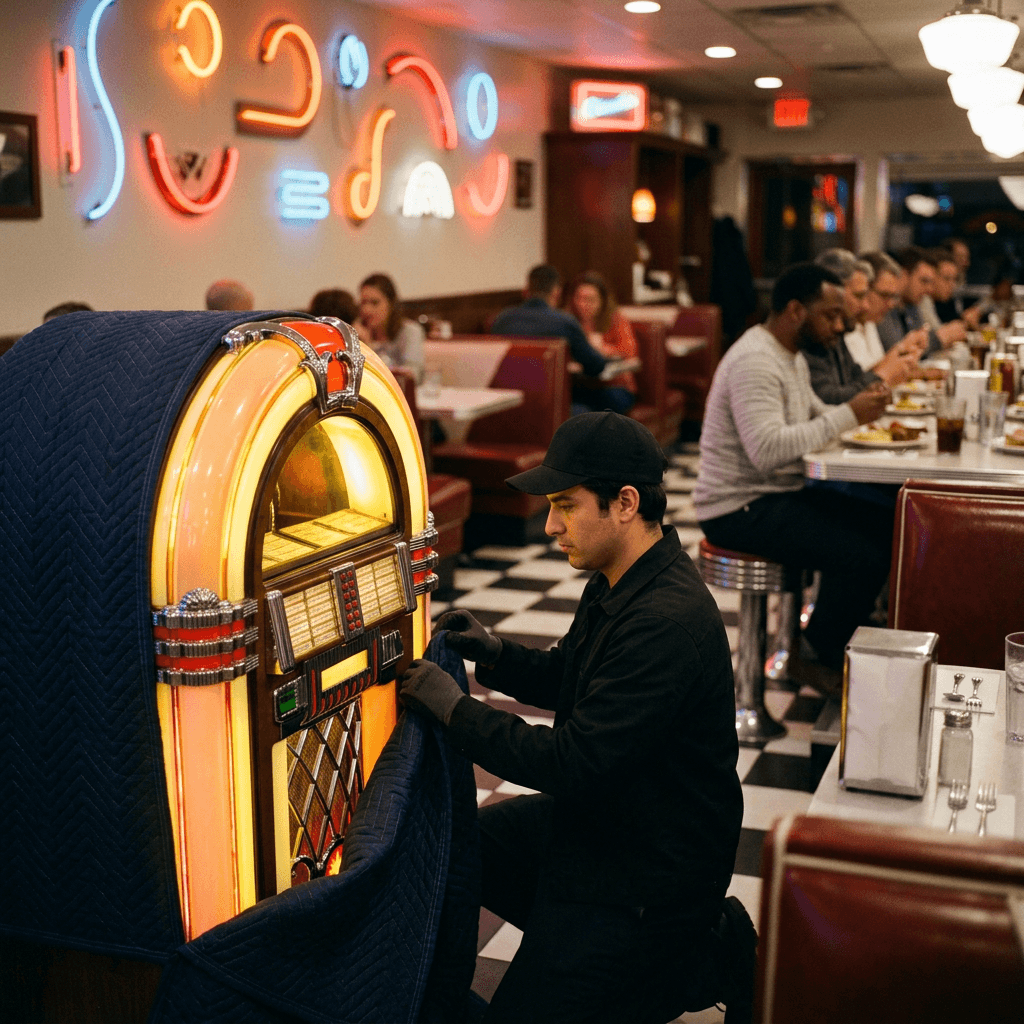
We move snack and soda machines, combo units, glass-front merchandisers, micro-market coolers, frozen and refrigerated units, ATMs, crypto kiosks, arcade machines, jukeboxes and coin-op laundry equipment across the lower 48 states, with international freight available. See our vending machine moving service for what is included.
- Survey and plan. We confirm the make, model, weight, dimensions and both locations, including stairs, doorways, elevators and dock access.
- Prep and protect. Product out, doors locked, shelves and spirals secured, glass padded, cords and loose parts bagged and tagged.
- Upright handling. Refrigerated units stay upright from pickup to delivery, moved on appliance dollies, stair-climbing dollies, pallet jacks and liftgate trucks sized for the job.
- Padded, strapped transport. Machines are blanket-wrapped, braced and load-locked so nothing shifts.
- Placement and setup. We place the machine where you want it, level it and, when requested, get it plugged in once it is safe to power up.
Relocating a Whole Vending Route or Multiple Machines
Moving one machine is a service. Moving a route is logistics. For multi-site rollouts across schools, campuses, office parks and franchise locations, we sequence deliveries by route, stage machines when a site is not ready and place each unit exactly where the operator wants it.
Operators deciding whether a location has run its course can read when to relocate a vending machine.
For full-route moves, see our vending route relocation service.
- Outbound: dock-to-placement delivery, not just curbside. We bring the machine inside, place it, level it and remove packaging.
- Outbound: white-glove last-mile delivery to schools, hospitals, offices, hotels, gyms and retail sites, with scheduled appointment windows and photo proof of delivery.
- Inbound: returns, trade-ins, lease-end pickups, refurbishment runs and warranty or repair moves.
- Inbound: imports and port pickups, from the port or freight terminal to your warehouse.
- Storage and distribution: secure storage for machines staged ahead of an install date, plus cross-dock and consolidation to cut down on partial loads.
Get Your Machine Ready: The Quick Checklist
Download the Vending Machine Move-Ready Checklist (PDF)
- Empty all product and cash; remove coin tubes and the bill stacker
- Unplug refrigerated units 12 to 24 hours before pickup so they can defrost and drain
- Empty and dry the condensate pan
- Secure shelves, spirals, trays and anything loose inside
- Lock the doors and hand keys to the driver, or tape them in an envelope inside a secured spot
- Disconnect card readers, telemetry and any water lines
- Photograph the machine from all sides before pickup
- Measure doorways, hallways, stairs and elevators at both locations
- Reserve freight elevators and loading docks; confirm building move hours and any COI requirements
- After delivery, wait before plugging in a refrigerated unit if it was tilted, and follow the manufacturer's guidance
Ready to move your vending machine? Call (866) 216-7742 or get a free quote.
Vending Machine Transport FAQ
- How do you transport a vending machine?
- Empty and unplug it, measure the route, move it upright on a rated appliance dolly, and strap it upright to the wall of a liftgate box truck at two heights with blankets between the straps and the cabinet.
- Can you transport a vending machine on its back?
- Avoid it. Refrigerated machines should stay upright to protect the compressor. If one must be laid down, let it stand upright for at least as long before powering it on; a full day is safest.
- How much does a vending machine weigh?
- Most full-size snack and drink machines weigh 600 to 900 pounds. Combo and glass-front refrigerated units are usually on the heavier end.
- Can I move a vending machine in a pickup truck?
- It is not recommended. The machine is too tall and top-heavy to secure safely in a pickup bed. A liftgate box truck with E-track is the right way.
- Do you move vending machines nationwide?
- Yes. USA Vending Machine Movers handles single machines and full routes across the lower 48 states, plus international inbound and outbound freight, with storage between placements.
- What do you need for a vending machine moving quote?
- Pickup and delivery ZIP codes, domestic or international, the machine type, dimensions and weight, a few photos and your requested pickup date. Call 866-216-7742 or use the quote form.
Need this moved?
Send your pickup and delivery ZIP codes, dimensions and a few photos for a fast quote. Call (866) 216-7742, seven days a week, or request a quote at our online quote form
Need this moved?
We relocate slot machines, vending machines, jukeboxes, and more — nationwide and internationally. Get a fast, no-obligation quote.
Key takeaways
- Relocating a machine makes sense when sales at the current location stay low. Plan the move so the machine is ready to restock as soon as it is placed.
- Empty all product, coins and cash, and unplug the machine at least 24 hours before pickup so refrigeration and electronics are fully powered down.
- Secure doors, glass and loose parts, and keep the machine upright the whole way. Most machines are not built to carry their weight lying down.
- Measure the machine and every doorway, stairway, hallway and elevator at both ends before booking.
- Ask for blanket or pallet wrap, liftgate service and inside delivery in the quote, so the price matches the job.
Related moving services
USA Vending Machine Movers handles the moves described in this article, locally, across the United States and internationally. See Vending Machine Moving & Transport for how we prepare, wrap, load and deliver each machine, or browse our service areas to find your city. For a quote, call 866-216-7742 or use the quote form with your pickup and delivery ZIP codes.
Planning your own vending machine move
If this article matches a move you are planning, these are the steps that turn it into a booked, on-time delivery. They apply whether the vending machine is going across town, to another state or overseas.
- Gather the basics: the vending machine make and model if you have it, its approximate size, and the pickup and delivery addresses or ZIP codes.
- Note the access at both ends, including steps, stairs, elevators, narrow doors, tight turns, parking and whether there is a loading dock. Photos are the fastest way to share this.
- Request a quote by phone at 866-216-7742 or through the quote form. The quote should list blanket or pallet wrap, liftgate service, inside delivery and any storage.
- Pick a pickup window and a delivery date that work for both sites. If the destination is not ready, ask about storage between the two.
- Prepare the machine the day before. Remove all product and coins, tape the coin door, and secure or remove spirals and shelves that could shift.
- On moving day the crew wraps a snack, drink or combo vending machine, moves it upright with the right dolly, loads it with a liftgate where there is no dock, and straps it in place for the trip.
- At delivery the machine is brought inside, set where it will run, levelled and unwrapped. Let refrigerated machines stand before plugging them back in.
What changes the price
- Distance and route. A local move, a regional move and a cross-country move are priced differently, and flexible dates on a shared lane usually cost less than a dedicated truck.
- Size and weight. The heavier and larger the vending machine, the more crew and equipment it needs.
- Access. Stairs, elevators, long carries and the lack of a dock all add time at pickup or delivery.
- Extra services. Liftgate, inside delivery, crating, storage and after-hours work each add to the quote.
- Timing. A fixed or short-notice date costs more than a flexible pickup window.
Domestic and international options
Within the United States, a vending machine can travel on a dedicated truck for a fixed date, or on a consolidated lane with other freight when timing is flexible. For international moves we crate the machine for ocean or air freight, prepare the commercial paperwork customs requires, and arrange delivery from the port or airport to the final site. You supply the documents only the owner can provide, such as proof of ownership and any permits the destination requires.
How the machine is protected in transit
A vending machine is heavy, top-heavy and easy to scratch, so protection starts before it leaves the building. For local and regional moves it is wrapped in moving blankets and padded at the corners and glass. For freight and long-distance moves it is shrink-wrapped to a pallet, and fragile or international shipments are crated. In the truck it stays upright and is strapped on its own so it cannot tip or rub against other freight. In very hot or cold weather, ask about scheduling and how long the machine will sit in the truck.
After delivery
- Let a refrigerated machine stand upright for several hours before plugging it in, following the manufacturer's guidance, so the refrigerant can settle.
- Once powered, confirm the compressor runs and the cabinet reaches temperature before restocking.
- Reinstall spirals and shelves, then test every selection, the coin mechanism, bill validator and card reader before the machine goes back into service.
If anything looks wrong when the machine is unwrapped, take photos and note it on the delivery paperwork before the crew leaves.
Getting the vending machine ready for pickup
- Empty it. Remove all product, coins, bills and loose parts, and keep the keys with you or tape them to the machine in an envelope.
- Unplug it early. Disconnect power at least 24 hours ahead so refrigerated units can defrost and drain, and wipe up any water.
- Secure what moves. Lock or tape doors, and protect glass fronts and displays so nothing can swing open or crack on the way out.
- Measure the path. Check the width of every doorway, hallway and turn, and note stairs, elevators and the distance to the truck at both sites.
- Clear the way. Move furniture and other equipment out of the route and confirm parking or dock access for the truck.
What is included
A standard quote covers the crew and the truck, blanket wrap or pallet and shrink-wrap depending on the distance, loading and strapping, liftgate unloading when there is no dock, and inside delivery to the spot you choose. Crating, storage and after-hours delivery are added only when the move needs them. To plan a vending machine move, call 866-216-7742 or use the quote form.
Common mistakes when moving a vending machine
- Laying it down. Most machines are built to stand upright. Tipping a vending machine on its back or side can crack glass, shift internal parts and, in refrigerated units, push compressor oil into the cooling lines.
- Skipping the measurements. A machine that fits through the front door may not fit around a tight hallway turn or into a small elevator cab. Measuring both buildings ahead of time avoids a wasted trip.
- Leaving product, coins or keys inside. Loose items add weight, shift in transit and can damage the mechanism. Keys left inside a locked machine can delay delivery.
- Plugging in too soon. Refrigerated machines should settle upright after the trip before they are powered on.
- Booking without describing the access. Stairs, a missing loading dock or a long carry from the truck change the crew and equipment needed. Mention them when you ask for a quote.
Dedicated truck or shared lane?
For a long-distance vending machine move there are two common ways to ship. A dedicated truck carries only your equipment, picks up and delivers on the dates you choose and suits fixed deadlines. A shared or consolidated lane carries your machine alongside other freight going the same direction, which usually costs less but needs a more flexible pickup and delivery window. Tell us your deadline when you request a quote and we will suggest the option that fits.
Scheduling and storage
Give as much notice as you can, especially for long-distance moves, fixed delivery dates or several machines at once. If the new site is not ready when the old one has to be cleared, the vending machine can be picked up, stored upright and wrapped, and delivered once the destination is ready. Ask for storage when you request a quote so it is included in the price and nothing has to be rearranged at the last minute.
Before moving day, confirm who will be on site at each address, the arrival window, and any building rules such as delivery hours, elevator booking or a certificate of insurance. A short call the day before usually prevents most delays.
Questions to ask before you book
- Have you moved this kind of vending machine before, and how will it be wrapped and secured?
- Is the machine kept upright the whole way?
- Does the price include liftgate, inside delivery and placement, or are those extra?
- What happens if the destination is not ready on the delivery date?
- What insurance or valuation coverage applies while the machine is in transit?
Measuring the route for a vending machine
Most moving-day problems start with a measurement nobody took. Before the crew arrives, measure the vending machine's height, width and depth, then follow the path it will take at both ends and measure each point where it could get stuck.
- Every doorway on the route, measured with the door fully open. Hinges and door stops often take away an inch or more.
- Hallway widths and any tight turns, since a tall machine needs room to pivot as well as to pass.
- Stairs: the number of steps, their width, any landings and whether there is a handrail that can be removed.
- Elevators: the door opening, the inside depth and the posted weight limit.
- Low ceilings, light fixtures, sprinkler heads and door closers that a tall machine on a dolly could hit.
Send these numbers with your quote request, along with a few photos of the route. If something is too tight, it is far easier to plan around it, for example by removing a door or booking a freight elevator, than to discover it on the day.